
Home › Legionnaires’ lives › Christophe Gobin
Christophe Gobin
Corporal · 2e REP, CRAP · Operation Pélican · Mort pour la France, 7 June 1997, Brazzaville
His regiment · insignia
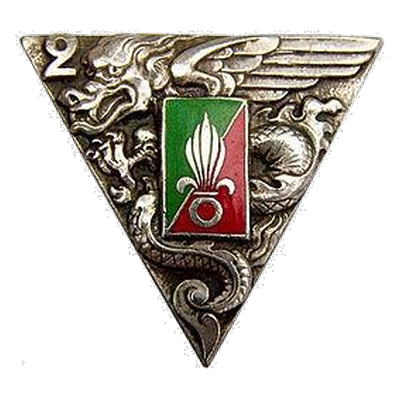 2e REPCRAP (now GCP) · CalviRead more →
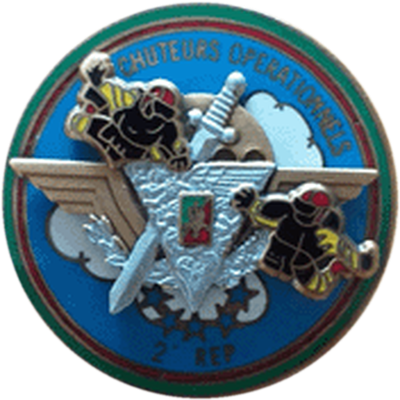 CRAP2e REP commandos (now GCP)·
Wersja polska → · Version française →
A commando from the Vendée
Christophe Gobin was born on 17 December 1970 in Saint-Gilles-Croix-de-Vie, in the Vendée, on the Atlantic coast. Before the Legion he served in the 3e RPIMa, the 3rd Marine Infantry Parachute Regiment in Carcassonne. Although he was French, he then joined the Foreign Legion — like many of his countrymen, under a new identity: in the Legion he was André Gilles, and his comrades called him “Gilles”. He joined the 2e REP in Calvi and its deep reconnaissance and action commandos (CRAP, renamed GCP in 1999), as a radio operator.
Almandin II — Bangui, 1996–1997
From 18 November 1996 Christophe served in the Central African Republic, in Operation Almandin II in Bangui, where part of the army had mutinied against President Patassé and the French forces stationed there were drawn into the fighting. On 6 December, while leading his team towards the Jackson bridge, he came under fire from a mutineer with a light machine gun; his immediate return fire allowed the rest of the team to manoeuvre, take the position and beat off the attack. On 5 January 1997, during the operation in the “Bea Rex – Kpetené – 92 logements” districts, he was part of the assault element sent against an advanced mutineer position at the Saint-Jacques church; he neutralised a rebel and seized a submachine gun and a large quantity of ammunition.
For these actions the Chief of the Defence Staff, General Douin, cited him in regimental orders and awarded him the Cross for Military Valour with bronze star (general order no. 2558 of 26 May 1997): “Mérite d’être cité en exemple” — deserves to be held up as an example. Twelve days before his death.
Operation Pélican
In spring 1997 the Mobutu regime was collapsing in neighbouring Zaire. France sent a force to Brazzaville, across the Congo River, ready to evacuate foreigners from Kinshasa. On 13 May the tactical headquarters of the 2e REP under Colonel Benoît Puga arrived, followed by the 1st Company and the support company (CEA) from Gabon. Kinshasa fell on 17 May without a fight and no evacuation was needed — but the legionnaires stayed in Brazzaville.
On 5 June, ahead of the presidential election, the forces of President Pascal Lissouba clashed in the capital with the “Cobra” militia of his rival Denis Sassou-Nguesso. The city became a battlefield, and thousands of foreigners were trapped in their homes.
7 June 1997, Avenue Schœlcher
At about 4.30 p.m. on 7 June the 1st Company was ordered to evacuate a French family trapped in the middle of the fighting in the city centre. The 3rd Platoon of Staff Sergeant Thomas Gast was given the task, and the regiment’s commandos (CRAP) under Captain Desmeules joined the convoy. Departure was delayed, and the column only set off after dark, at about 7.30 p.m.: the company commander’s jeep, two platoon trucks, the commandos’ vehicles and the second-in-command’s unarmoured jeep. It drove down Avenue Schœlcher towards the roundabout by the French Cultural Centre, along the wall of a Congolese army barracks with a military school. After a long stop at a checkpoint, at about 8 p.m., at the crossroads 150 metres before the roundabout, a red flare went up and a hail of fire came from the whole length of the barracks wall — including a 14.5 mm heavy machine gun. The last truck was hit hardest: a sergeant was shot in the back and two legionnaires were wounded. The CEA platoon called in as reinforcement, with the medical VAB, was also pinned down by heavy fire.
The CRAP commandos came up the avenue from the roundabout. Captain Desmeules set off for the pinned-down group with his medic, Warrant Officer Karine, and his radio operator, Corporal Gobin. Just as they arrived, the firing flared up again. Christophe, carrying his radio, was shot through the heart and died despite the medic’s efforts. The firing only stopped at about 11.30 p.m., when the Congolese negotiator came down the avenue with a white flag; the medical VAB took away the dead man and the most seriously wounded. The French Army’s toll for the day: one killed and nine wounded, five of them seriously. Christophe was 26.
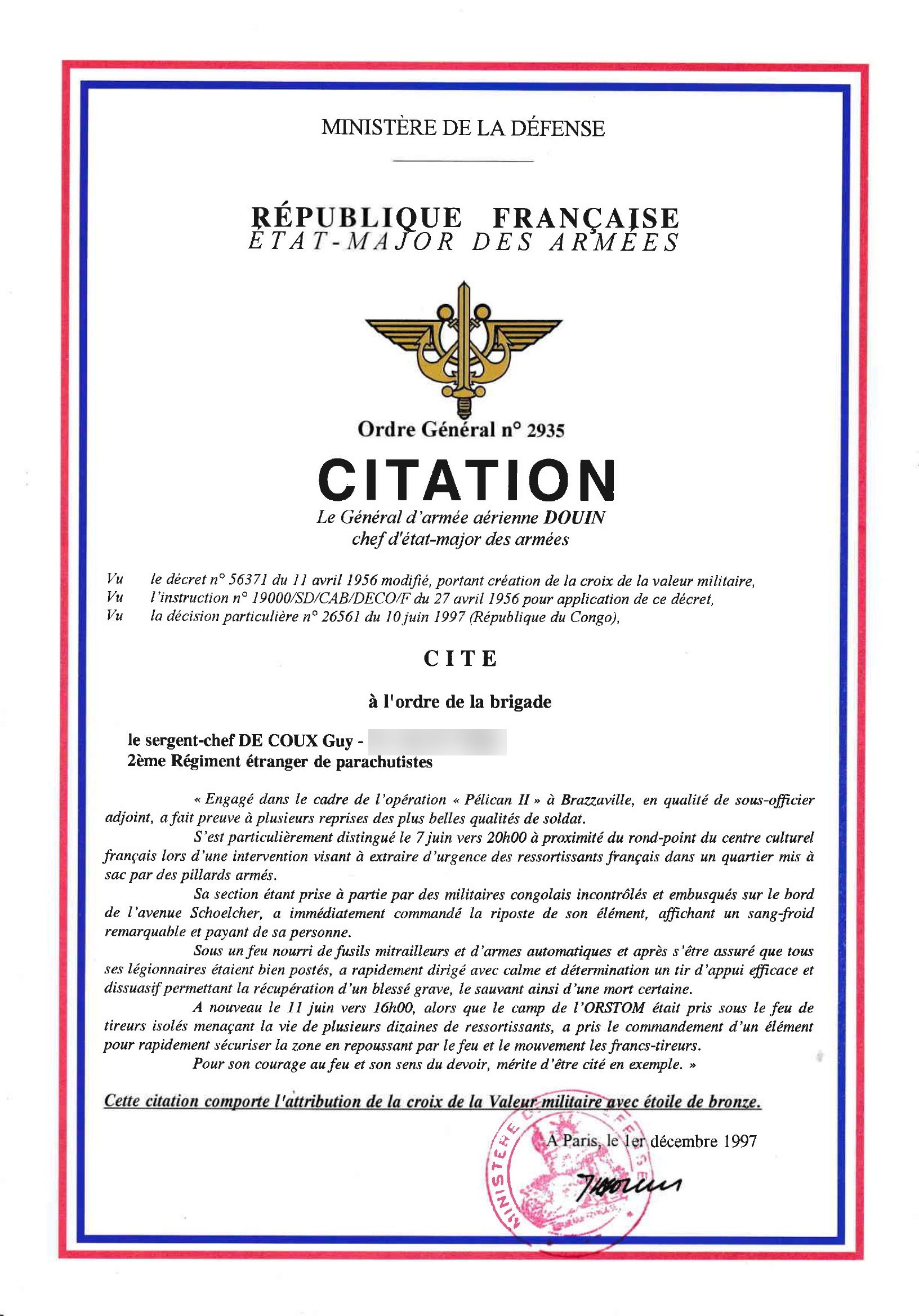
We know how the ambush unfolded from an eyewitness, Guy de Coux — then a staff sergeant and the platoon’s second-in-command, who directed the covering fire that evening and was cited in brigade orders with the Cross for Military Valour.
He had arrived in Brazzaville on 13 May 1997 as a member of the parachute commando section. On 17 June 1997 the Minister of Defence, Alain Richard, posthumously cited him in army orders and awarded him the Cross for Military Valour with palm. The citation states that at about 8 p.m., during an operation to rescue French nationals from a district being looted by armed gangs, he was mortally hit by a bullet in the heart while helping a very seriously wounded legionnaire: “A trouvé la mort alors qu’il accomplissait son devoir avec courage et abnégation” — he died doing his duty with courage and self-sacrifice.
The evacuation
The mission went on. From 8 to 15 June Operation Pélican II, under General René Landrin, reached its full scale: reinforcements arrived from Gabon, Chad and the Central African Republic — the 2e REI, 1er REC, 8e RPIMa and special forces of the COS. In armoured vehicles the legionnaires of the 2e REP pulled people out of Poto-Poto, from around the cathedral, the Méridien hotel and the embassies, crossing the lines of the warring factions again and again. The 4th Platoon of the 3rd Company, at the boat club on the Congo River, took more than 500 people to safety by water. At the ORSTOM camp the legionnaires received, registered, housed and fed thousands of civilians before taking them to Maya-Maya airport.
According to the French Army’s official figures, 5,666 foreigners, including 1,524 French nationals, were evacuated from Brazzaville to Libreville and Pointe-Noire. On 19 June General Landrin left Brazzaville, and Colonel Puga led the final phase of the withdrawal. On 20 June the last French aircraft took off from Maya-Maya — they had barely left the ground when fighting for the airport broke out again. Operation Pélican was over; the Congolese civil war went on. General Landrin later wrote that despite the bitterness of their comrade’s death and the wounds of others, the “Pelicans” could be proud of having saved thousands of people.
“We do not forget”
In October 2016, almost twenty years later, the Belmudes family, who in 1997 had been working in Brazzaville for French Cooperation, wrote to Christophe’s mother. In June 1997 they were in the city with their two-year-old daughter: four days and three nights of fear amid gunfire and explosions, before French soldiers took them from their home, then another night under fire at the airport, protected by legionnaires, before a Transall flew them to Libreville. In the rush they had not been able to thank anyone. When they came across a publication about the 2e REP with Christophe’s name and face, they finally wrote: “We left Brazzaville without being able to say thank you to our soldiers.” They described the fear, but also the calm and professionalism of the legionnaires to whom they owe their survival, and paid tribute to the young legionnaire who fell and to all his brothers in arms: “We do not forget.”
The evacuated families went home to their loved ones and their lives. In the ranks of the 2e REP one man was missing: Corporal Christophe Gobin, killed in action for France in Brazzaville on 7 June 1997.
Christophe rests in the cemetery of Entressen, at the edge of Istres air base (BA 125). His gravestone bears his photo in parachute harness, the words “Caporal Christophe Gobin, 17.12.1970 – 07.06.1997”, the inscription “Mort pour la France” and the French tricolour.
Poles also took part in Operation Pélican: Jacek Stawicki, a 2e REP legionnaire at the regimental medical post (CCS), received the Cross for Military Valour for Brazzaville. The account of SCH Guy de Coux (in French) of the fighting in Brazzaville (see also his citation with the Cross for Military Valour) names other Poles as well: SGT Modrowski, leader of the 3rd group, who rallied the 2nd and 3rd groups at the roadside under fire, and 1CL (legionnaire first class) Stolarski who, with CPL Saeversson, reached the wounded legionnaire Jefferson and helped pull the badly wounded SGT Lefèbvre out of the line of fire. On the whole operation: Opération Pélican · Brazzaville 1997 (in French).
Corporal Gobin’s name is on the French Army’s “In memoriam” list and on the memorial board in Calvi, “En hommage à nos frères d’armes tombés au champ d’honneur”. Each fallen comrade has his own card there, with his photo and a workout bearing his name, which legionnaires perform in his memory. The Gobin workout: two rounds for time, 24 reps of seven exercises — deadlift (85 kg), plyometric box jumps, wall-ball squats (10 kg), bench press (60 kg), box jumps and wall-ball squats again, and finally a power clean (30 kg).
Film · In memoriam
Film in memory of Corporal Christophe Gobin (17.12.1970 – 07.06.1997) — English version · version française ↗ · wersja polska ↗ · Watch on YouTube ↗
From a friend’s album
These photos and documents were entrusted to us by Christophe’s closest friend, Freddy Boudaud, to whom Christophe’s mother handed over her son’s memory and belongings. Our heartfelt thanks to him.
We are looking for: Freddy Boudaud’s memories; memories of comrades — including the Poles of the 4th Platoon, 3rd Company (boat club); his enlistment date and decorations. Write to us: amicale.pologne@yahoo.com.
Sources: Guy de Coux’s eyewitness account of the Avenue Schœlcher ambush (2026, Amicale archive; in the first version of the account the wounded group leader was named SGT Lejeune — in November 2026 the author corrected this to SGT Lefèbvre); citation of SCH Guy de Coux, 1 December 1997; account of Operation Pélican published by Guy de Coux, then a sergent-chef and deputy commander of the 3rd platoon, 1st Company of the 2e REP in Brazzaville in 1997 (based among others on: CDEF, Répertoire typologique des opérations, t. II, « Pélican I, II et III » ; Yves Debay, « Opération Pélican 2 à Brazzaville », RAIDS n° 135, août 1997 ; ministère des Armées — In memoriam caporal Christophe Gobin ; Une Plume pour l’Épée — testimony of the Belmudes family, 2016) ; Theatrum Belli — In memoriam caporal Christophe Gobin ; armée de Terre — In memoriam ; Mémoire des hommes / Le Souvenir français (date and place of birth) ; général René Landrin, « Pélican : une opération humanitaire exemplaire », Revue Défense Nationale ; Wikipédia — Opération Pélican ; RAIDS n° 135 (août 1997) ; foreignlegion.info. Photo: Marek Kogut (Calvi).
Did you know Christophe? Were you in Brazzaville in 1997? Write to us: amicale.pologne@yahoo.com.
Rest in peace · More Majorum · Legio Patria Nostra